
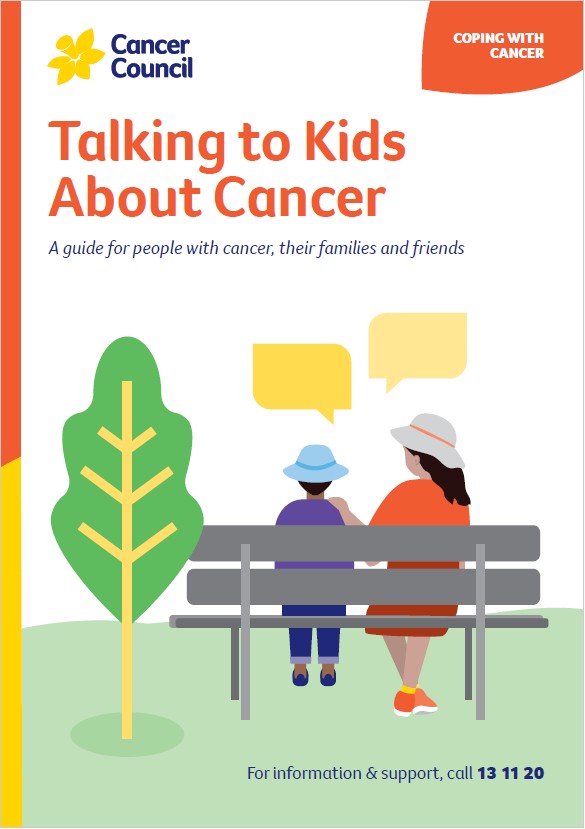
If you have young children or grandchildren, telling them that you are dying will be difficult. There is no easy way to approach this conversation, but it is important to let them know what is happening.
Like adults, children of all ages need time to prepare for the death of someone close to them. It’s natural to want to protect children, but they will often sense that something has changed. Not sharing the prognosis can add to their anxiety – and yours.
Talking openly to children about death may help them to feel more comfortable spending time with someone who is dying. Older children are likely to appreciate being trusted with the news.
Talking to children and grandchildren about death
How you tell children or grandchildren will depend on their age, but these suggestions may help:
- It may be easier to have your partner or a support person with you when you have the initial discussion.
- Practice what you are going to say in front of a mirror beforehand.
- Be honest with children and explain the situation using straightforward words, such as “dying” and “death”. Avoid terms such as “pass away” or “going to sleep”, which can be confusing or alarming for them.
- Keep your explanations simple. Be guided by their questions so you don’t offer more information than they may want or can handle.
- You may ask children what they know about death and what they think it means. This can help you to clear up any misconceptions about death.
- Depending on their age, children may benefit from seeing a counsellor or play therapist.
Learn more about talking to kids about cancer, call 13 11 20, or listen to the podcast below.
→ READ MORE: Coping with change and loss
Podcast: Explaining Cancer to Kids
Listen to more episodes from our podcast for people affected by cancer
Fiona Wiseman, Senior Social Worker, Peter MacCallum Cancer Centre, VIC; Grace Berwald, Consumer; Peta Brydon, Metastatic McGrath Breast Care Clinical Nurse Consultant, The Kinghorn Cancer Centre, NSW; Kate Bunyan, Social Worker, Psychosocial Lead, Cancer and Palliative Supportive Care, Canberra Region Cancer Centre, ACT; Hayden Christie, Medical Oncologist and Clinical Director Cancer Care Service and Clinical Lead of the VAD Service for Wide Bay Hospital and Health Service, QLD; John Clements, Consumer; Claire Davies, Spiritual Care Practitioner, Peter MacCallum Cancer Centre, VIC; Joanne Dean, Nurse Practitioner, PEACE Team, Clare Holland House, ACT; A/Prof Michael Franco, Medical Oncologist and Palliative Medicine Physician, Deputy Head – Monash Medical School, Monash University, VIC; Dr Sally Greenaway, WSLHD Director of Supportive and Palliative Care, Senior Staff Specialist Clinical Haematology and Clinical Ethics Service, NSW; Maree Grier, Clinical Psychologist, Royal Brisbane and Women’s Hospital, QLD; Dr Catherine Joyce, National Manager, Advance Care Planning Australia; Mattesse Kitchin, Consumer; Penny Neller, Project Manager, End of Life Law for Clinicians, Australian Centre for Health Law Research, Queensland University of Technology, QLD; Caitriona Nienaber 13 11 20 Consultant, Cancer Council WA; Palliative Care Australia; A/Prof Joel Rhee, Head of Discipline of General Practice, School of Clinical Medicine, University of New South Wales, NSW.
View the Cancer Council NSW editorial policy.