
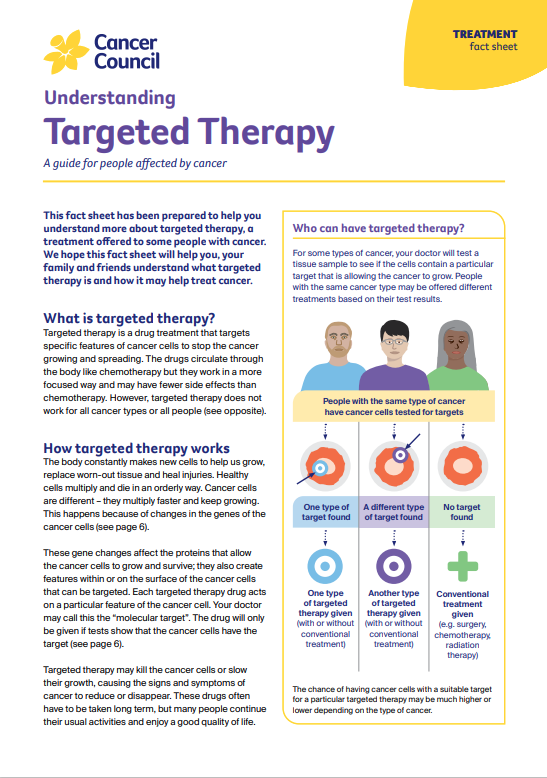
Targeted therapy is a drug treatment that targets specific features of cancer cells to stop the cancer growing and spreading. The drugs circulate through the body like chemotherapy, but they work in a more focused way and may have fewer side effects than chemotherapy.
Targeted therapy has led to improved survival rates for people with some types of cancer.
How targeted therapy may help
These drugs are becoming an important part of cancer treatment and may help:
- after surgery to destroy any remaining cancer cells
- to treat advanced cancer that hasn’t responded to other treatment, or cancer that has come back
- as maintenance treatment for advanced cancer.
Targeted therapy drugs often cause the signs and symptoms of cancer to reduce or disappear. This means many people can return to their usual activities. The drugs may need to be taken long term, and you will need to have regular tests to monitor the cancer.
When are targeted therapies used?
Some targeted therapy drugs have been approved for use in Australia for the treatment of a range of cancers including bowel, breast, cervical, kidney, liver, lung, ovarian, stomach and thyroid, as well as melanoma and some forms of leukaemia, lymphoma and myeloma.
Targeted therapy drugs have been effective in treating some people with these cancers, but they may not be the best treatment for everyone with advanced cancer.
The Pharmaceutical Benefits Scheme (PBS) subsidises the cost of some targeted therapy drugs for certain cancers. Targeted therapy drugs not on the PBS are usually expensive, but you may be able to have them as part of a clinical trial.
Learn more about targeted therapy.
Side effects
These vary depending on the targeted therapy used, but may include:
- fevers
- sensitivity to the sun
- rashes
- headaches
- diarrhoea
- bleeding and bruising
- blood pressure changes.
→ READ MORE: Immunotherapy for advanced cancer
Podcast: Treatment Options for Advanced Cancer
Listen to more of our podcast for people affected by advanced cancer
All updated content has been clinically reviewed by Dr Lucy Gately, Medical Oncologist, Alfred Health and Walter and Eliza Institute for Medical Research, VIC and Penny Neller, Project Manager, End of Life Law for Clinicians, Australian Centre for Health Law Research, Queensland University of Technology, QLD. This edition is based on the previous edition, which was reviewed by the following panel: Dr Lucy Gately (see above); Dr Katherine Allsopp, Supportive and Palliative Care Specialist, Westmead Hospital, NSW; Prof Megan Best, The University of Notre Dame Australia and The University of Sydney, NSW; Dr Keiron Bradley, Palliative Care Consultant, Medical Director Palliative Care Program, Bethesda Health Care, WA; Craig Brewer, Consumer; Emeritus Professor Phyllis Butow, Psychologist, The University of Sydney and Chris O’Brien Lifehouse, NSW; Louise Durham, Palliative Care Nurse Practitioner Outpatients, Princess Alexandra Hospital, Metro South Palliative Care, QLD; Dr Roya Merie, Radiation Oncologist, Icon Cancer Centre, Concord, NSW; Penny Neller (see above); Caitriona Nienaber, 13 11 20 Consultant, Cancer Council WA; Xanthe Sansome, Program Director, Advance Care Planning Australia, VIC; Sparke Helmore Lawyers; Peter Spolc, Consumer.
View the Cancer Council NSW editorial policy.