
If your doctor has told you that the cancer cannot be cured, you may wonder whether there are any other therapies that could help.
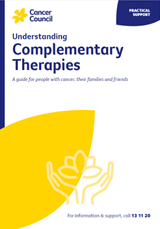
Complementary therapies are used alongside medical treatments and tend to focus on the whole person, not just the cancer. They include practices like acupuncture, mindfulness and herbal medicines.
Complementary therapies may help you relax and feel calmer. Some can also manage symptoms such as pain and nausea. Some people find gentle therapies helpful, such as massage and aromatherapy. People who find physical touch uncomfortable or painful may prefer other therapies such as meditation or visualisation.
Talk to your doctor about what complementary therapies are right for you, as some may interact with your cancer treatment, make side effects worse, or make treatment less effective.
For more on this, see Complementary therapies.
Alternative therapies are different to complementary therapies
They are used instead of approved medical treatment, and are often promoted as cancer cures.
Family, friends or strangers may suggest you try alternative therapies when they hear of your prognosis.
Unlike conventional medical treatments, many alternative therapies have not been scientifically tested, so there is no proof they stop cancer growing or spreading.
Some alternative therapies have been tested and shown to be harmful. They may also be very expensive and could interfere with other medicines.
If you are considering trying an alternative therapy, discuss this with your doctor first. Cancer Council does not recommend the use of alternative therapies as a treatment for cancer.
→ READ MORE: What does “dying well” mean?
Podcast: Living Well with Advanced Cancer
Listen to more of our podcast for people affected by advance
Key resource
Download a PDF booklet on this topic.
More resources

Fiona Wiseman, Senior Social Worker, Peter MacCallum Cancer Centre, VIC; Grace Berwald, Consumer; Peta Brydon, Metastatic McGrath Breast Care Clinical Nurse Consultant, The Kinghorn Cancer Centre, NSW; Kate Bunyan, Social Worker, Psychosocial Lead, Cancer and Palliative Supportive Care, Canberra Region Cancer Centre, ACT; Hayden Christie, Medical Oncologist and Clinical Director Cancer Care Service and Clinical Lead of the VAD Service for Wide Bay Hospital and Health Service, QLD; John Clements, Consumer; Claire Davies, Spiritual Care Practitioner, Peter MacCallum Cancer Centre, VIC; Joanne Dean, Nurse Practitioner, PEACE Team, Clare Holland House, ACT; A/Prof Michael Franco, Medical Oncologist and Palliative Medicine Physician, Deputy Head – Monash Medical School, Monash University, VIC; Dr Sally Greenaway, WSLHD Director of Supportive and Palliative Care, Senior Staff Specialist Clinical Haematology and Clinical Ethics Service, NSW; Maree Grier, Clinical Psychologist, Royal Brisbane and Women’s Hospital, QLD; Dr Catherine Joyce, National Manager, Advance Care Planning Australia; Mattesse Kitchin, Consumer; Penny Neller, Project Manager, End of Life Law for Clinicians, Australian Centre for Health Law Research, Queensland University of Technology, QLD; Caitriona Nienaber 13 11 20 Consultant, Cancer Council WA; Palliative Care Australia; A/Prof Joel Rhee, Head of Discipline of General Practice, School of Clinical Medicine, University of New South Wales, NSW.
View the Cancer Council NSW editorial policy.