

Fatigue is a common side effect of cancer and its treatment. This section offers tips to help you manage it both during and after treatment.
Learn more about:
Overview
The first step in managing fatigue is working out how it affects you. Use a scale to rate your fatigue from 1–10; the higher the number, the worse the fatigue.
Keep a record of your fatigue level at different times of the day, as well as anything you try and whether it helped. This can help you to understand how you feel day to day.
Seeking professional support
Talk to:
- your general practitioner (GP)
- your oncologist, haematologist or nurse
- an allied health professional such as an occupational therapist, physiotherapist or exercise physiologist.
Tell them how you feel, and how long you’ve had fatigue.
Managing underlying causes
Your doctor will manage any health conditions, medicines or symptoms that may be causing or contributing to the fatigue. For example, if your red blood cell count is low (anaemia), you may be prescribed medicines or have a blood transfusion. If pain is making fatigue worse, your pain medicine may need to be changed or adjusted.
Your doctor may also suggest trying medicines that are being studied to help people with cancer-related fatigue, including certain steroids for people with advanced cancer
Ways to manage fatigue
These tips can help you manage cancer-related fatigue during and after treatment.
 Make time to move
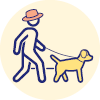 Make time to move
- Studies show that doing exercise can improve cancer-related fatigue, both during treatment and afterwards
- Ask your doctor what exercise is safe for you. An accredited exercise physiologist or a qualified physiotherapist can make a program for you.
- Start slowly. Gradually increase your activity as fatigue improves. Work towards 30 minutes of moderate or harder activity (e.g. swimming or fast walking) most days.
- Try to do things that help mobility, balance and coordination (e.g. hanging out clothes or gardening) at least 3 days a week.
- Aim for 2 muscle-training activities (e.g. weights or resistance bands) a week.
- Gentle yoga may help with fatigue, sleep and stress.
- Watch our online exercise videos.
- See Exercise for people living with cancer.
Seek some support
 Seek some support
- Studies show that cognitive behaviour therapy (CBT) and mindfulness-based stress reduction (MBSR) can help manage fatigue during and after treatment. Ask your GP about programs near you, or who may be best to help you with this.
- Accept offers of help or ask family, friends or neighbours to help with household chores, cooking or gardening.
- Your local council or social worker can put you in touch with services for help at home (such as house cleaning, meals or shopping). Some are free, while others have a cost.
- Talk to your healthcare team about how you are feeling. They can assess if you have depression. Counselling or medicine, even for a short time, may be helpful.
- Connect with a support group, either in person, over the phone or online.
- Speak to your employer about changes they can make to support you.
Try therapies that help
 Try therapies that help
- Before trying any complementary therapies, ask your healthcare team whether they may be helpful and safe for you. Studies show doing tai chi, qi gong or taking American ginseng may help during treatment. After treatment, yoga, acupressure and moxibustion (a traditional Chinese therapy that burns herbs near the skin) may improve fatigue.
- There is some evidence that acupuncture can reduce cancer-related fatigue. Check your acupuncturist is registered at the Chinese Medicine Board of Australia.
- Relaxation and meditation techniques can help reduce stress. Listen to our podcast series Finding Calm During Cancer.
- For general health, eat well and stay hydrated. A dietitian can give you suggestions, visit dietitiansaustralia.org.au to find a dietitian.
- See Nutrition and cancer and Complementary therapies.
Set up a sleep routine
 Set up a sleep routine
- Pace your activities, take regular short breaks, and rest when you need to.
- Prioritise activities that you enjoy or give you a sense of achievement.
- Get a referral to an occupational therapist or physiotherapist for tips on how to save energy.
- Aim for 7–9 hours sleep each night. Or 7–8 hours if you are aged 65 or over. Only have short naps (sleeps) during the day.
- Try to go to bed and get up at the same time. Have a bedtime routine that includes activities such as meditation.
- Avoid screen time (e.g. mobile phones or tablets) at night.
- Get some natural light during the day – especially in the morning.
- Avoid drinking alcohol and smoking – this can affect how well you sleep.
- If you’re unable to fall asleep, get up and do something relaxing until you feel sleepy.
- If you’re still not sleeping well, talk to your doctor.
The costs for seeing an exercise physiologist, physiotherapist, dietitian or occupational therapist vary. If your doctor refers you as part of a GP chronic condition management plan, you may be eligible for a Medicare rebate for up to 5 visits per calendar year. If you have private health insurance, your insurer may cover some of the cost.
Questions for your doctor
Try this checklist for questions to ask your doctor.
- What is causing the fatigue? Do I need a blood test to find out what is contributing to the fatigue?
- What can I do to reduce or manage the fatigue?
- Is there anything that I should avoid doing?
- What can help me to sleep better?
- How long is the fatigue likely to last?
- Can a social worker talk to me about home help?
- What exercise or activity do you recommend?
- Can you refer me to an occupational therapist, physiotherapist or exercise physiologist who works with people with cancer-related fatigue?
- Can you refer me to someone who can provide CBT or mindfulness interventions?
- Are there fatigue clinics or local group programs that I can attend?
- Are there complementary therapies that may help?
Podcast: Managing Cancer Fatigue
Listen to more of our podcast for people affected by cancer
More resources

All updated content has been clinically reviewed by: Prof Michael Jefford, Medical Oncologist and Director, Australian Cancer Survivorship Centre, Peter MacCallum Cancer Centre, VIC. This edition is based on the previous edition, which was reviewed by the following panel: Prof Michael Jefford; Kirsten Adlard, Exercise Physiologist, The University of Queensland, QLD; Anthea Carey, Consumer; Andrea Concannon, Consumer; Dr Briana Clifford, Exercise Physiologist, UNSW Fatigue Clinic and Research Program, NSW; Hazel Everett, Clinical Nurse Consultant – Cancer Services, St John of God Subiaco Hospital, WA; Dr Suzanne Grant, Senior Research Fellow, NICM Health Research Institute, Western Sydney University, and Chris O’Brien Lifehouse, NSW; Pippa Labuc, Senior Occupational Therapist, Peter MacCallum Cancer Centre, VIC; Prof Andrew Lloyd, Director, UNSW Fatigue Clinic and Research Program, NSW; Catherine Meredith, Consumer; Dr David Mizrahi, Exercise Physiologist and Research Fellow, The Daffodil Centre at Cancer Council NSW and The University of Sydney; Dr Elizabeth Pearson, Allied Health Researcher, Peter MacCallum Cancer Centre, VIC; Dr Astrid Przezdziecki, Clinical Psychologist, Mind My Health, NSW; Chris Sibthorpe, 13 11 20 Consultant, Cancer Council Queensland; Kate Woodhead, Physiotherapist, St Vincent’s Hospital Melbourne, VIC.
View the Cancer Council NSW editorial policy.