

IV chemotherapy can be delivered in the following ways.
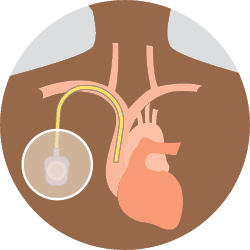 |
Central venous access device (CVAD)This is a thin plastic tube that remains in your vein throughout the treatment course (for several weeks or months). It allows the treatment team to give chemotherapy, other drugs, fluid or blood transfusions, and draw blood. A CVAD is inserted under local anaesthetic and it shouldn’t cause discomfort or pain. Common types include:
|
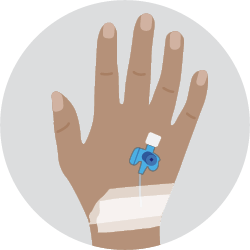 |
CannulaThis is a small plastic tube inserted into a vein in your arm or the back of your hand. Having a cannula put in can be uncomfortable, but it should only take a few minutes. The cannula can be kept in place if you need to stay in hospital for a few days. If you have day treatment every few weeks, the cannula is usually put in and taken out each time you visit. |
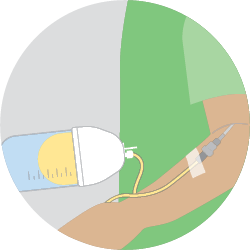 |
Portable pumpThis is a device that gives a prescribed amount of chemotherapy continuously for up to a week. It is attached to a CVAD and does not need to be connected to a power point. Different types of pumps are used (pictured left is an elastomeric infusion pump). The pumps are small and can be carried in a bag and tucked under a pillow when sleeping. |
Caring for your CVAD
A nurse will show you how to look after your CVAD to prevent infections or blockages. You may visit the clinic, or a nurse may visit you at home to help clean tubes or lines. Contact your healthcare team immediately if there is pain, redness or swelling around the CVAD.
→ READ MORE: Other ways of having chemotherapy
Podcast: Making Treatment Decisions
Listen to more episodes from our podcast for people affected by cancer
Download Easy Read and resources in other languages

Prof Desmond Yip, Senior Staff Specialist, Department of Medical Oncology, The Canberra Hospital, ANU School of Medicine and Psychology, ANU College of Health & Medicine, The Australian National University, ACT; Gillian Blanchard, Nurse Practitioner, Calvary Mater, Newcastle, NSW; Ken Colbert, Consumer; Laura Collins, Clinical Dietitian, GenesisCare, WA; Karen Gray, Consumer; Kate Lucking, 13 11 20 Consultant, Cancer Council SA; Louise Moodie, Director of Dietetics, Mackay Hospital and Health Service, QLD; Dr Shivanshan Pathmanathan, Medical Oncologist, Townsville Cancer Centre, Townsville University Hospital, QLD; Dr Marissa Ryan, Acting Consultant Pharmacist (Cancer), Princess Alexandra Hospital, Woolloongabba, QLD; Jayne Watson, Clinic Nurse Consultant, Peter MacCallum Cancer Centre, Melbourne, VIC; Stephanie Webster, Consumer.
View the Cancer Council NSW editorial policy.