

Palliative care is person-centred care that helps people with a progressive, life-limiting illness live as comfortably as possible.
Learn more about:
- Overview
- Barriers to inclusive palliative care
- Respectful, inclusive care
- Recognising family
- Intimacy and palliative care
Overview
The main goal is to maintain your quality of life by dealing with your physical, emotional, cultural, social and spiritual needs. Palliative care also supports families and carers, including with bereavement care.
Depending on what services are available where you live, you can have palliative care at home, at a residential aged care facility, or in a hospital or specialist palliative care unit.
For more on this, see our general section on Palliative care.
Barriers to inclusive palliative care
After experiencing a lifetime of discrimination and stigma, LGBTIQA+ people may worry about receiving palliative and end-of-life care that is safe and meets their needs. Your concerns about receiving inclusive palliative care may also be influenced by any unpleasant experiences and negative attitudes you may have had when friends had palliative care during the HIV/AIDS epidemic.
Reasons why LGBTIQA+ people may avoid or delay accessing palliative care services include:
- distrust of healthcare providers because of past experiences
- fear of discrimination, harassment, judgement or having to hide their identity
- concerns that health professionals will make assumptions about their gender, body or sexual orientation
- fears that health care will not affirm their gender
- concerns about physical safety or receiving respectful personal care
- worry about their partner/s or family of choice being excluded
- lack of support with advance care planning and access to palliative care
- fears about social isolation and facing the end of life.
Other aspects of identity, such as age, race, culture, disability, and where you live, can also influence how you feel about palliative care.
Respectful, inclusive care
All LGBTIQA+ people have the right to palliative care that is safe, respectful and inclusive. It’s unlawful for palliative care services to discriminate against LGBTIQA+ people (see Dealing with discrimination).
Some LGBTIQA+ people who use palliative care services disclose their sexual orientation, gender or intersex variation, while others don’t.
It’s your choice, but letting your palliative care providers know more about you can help them best meet your needs.
When looking for palliative care providers, ask how they make people feel safe, included and respected. This may give you an opportunity to raise any specific care needs related to your sexual orientation, gender or intersex variation.
Learn some ways to identify LGBTIQA+ friendly services.
Recognising family
Palliative care recognises the importance of involving spouses, partner/s, family and carers in decisions about your care, with your consent. The palliative care team will also provide family and friends with emotional support and referrals to counselling and grief support
Some LGBTIQA+ people are estranged from their family of origin and surround themselves with chosen family. Others are not out to their family, or their family is hostile to their identity. Sometimes, conflicts can arise between the family of origin and the chosen family.
To ensure that the people you want to make decisions on your behalf are recognised by the palliative care service, you should appoint one or more substitute decision-makers.
Intimacy and palliative care
Sexual activity and intimacy remain important to many people, even when cancer is advanced. It’s okay to talk to your healthcare team about the impact of any treatment on your sex life or ability to be intimate.
If you have a spouse or partner/s, try to spend intimate time together, rather than only as “patient” and “carer”. If you’re in residential palliative care, ask if a double bed is available so you can have some private time. Intimacy can provide comfort and maintain connection.
Even if sexual intimacy is no longer possible or desired, you may enjoy physical closeness through cuddling, touching, massage or simply lying beside each other.
→ READ MORE: Advance care planning
Podcast: Treatment Options for Advanced Cancer
Listen to more of our podcast for people affected by advanced cancer
Key resource
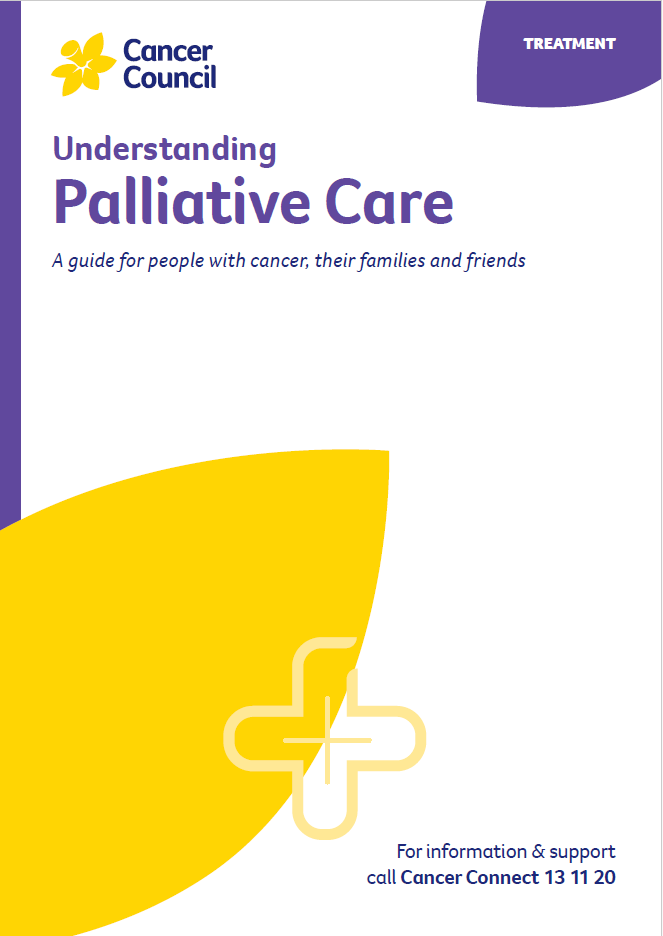
The information on this page is also available for download.
This resource was developed as part of the Western Sydney University Out with Cancer research project.
Prof Alison Brand, Clinical Professor, The University of Sydney and Director, Department of Gynaecological Oncology, Westmead Hospital, NSW; Dr Daniel Brown, Clinical Psychologist and Researcher, School of Psychology and Public Health, La Trobe University, VIC; Dr Rosalie Power, Senior Research Fellow and Deputy HDR Director, Translational Health Research Institute (THRI), Western Sydney University, NSW; Dr Sarah Bishop Browne, Palliative and Supportive Care Staff Specialist, Chris O’Brien Lifehouse, NSW; Collette Butler, Clinical Nurse Consultant and McGrath Breast Care Nurse, Cancer Support Centre, Launceston, TAS; Prof Ada Cheung, Endocrinologist, NHMRC and Dame Kate Campbell Research Fellow and Head, Trans Health Research Group, The University of Melbourne, VIC; Dr Tiffany Daly, Radiation Oncologist, Princess Alexandra Hospital, Raymond Terrace, QLD; A/Prof Ian Faragher, The University of Melbourne and Head, Colorectal and General Surgery Unit, Western Health, VIC; Hall & Wilcox (law firm); A/Prof Peter Heathcote, Urologist, Brisbane Urology Clinic, QLD; Prof Richard Hillman, Senior Staff Specialist, HIV and Immunology, St Vincent’s Health Network, Sydney, NSW; Mads Kennedy, Project Coordinator, Silver Rainbow, LGBTIQ+ Health Australia, NSW; Dr Sanjeev Kumar, Breast Cancer Medical Oncologist and Clinician Scientist, Chris O’Brien Lifehouse, NSW; Madeline Lee, 13 11 20 Consultant, Cancer Council NSW; Luke Mitchell, Urological and Sexual Health Nurse Practitioner, Men’s Health Melbourne, VIC; Nadia Reddish, Consumer; Dr Stephen Rowles, Sexual Health Physician and General Practitioner, The Centre Clinic and Melbourne Sexual Health Centre, VIC; Teresa Simpson, Senior Clinician, Psycho-Oncology Social Work Service, Cancer Therapy Centre, Liverpool Hospital, NSW; Mel Tume, Consumer; Prof Jane Ussher, Professor of Women’s Health Psychology and Chief Investigator, Out with Cancer Study, Western Sydney University, NSW; Syr Lumi Vor, Community Member; John Wenborn, Shine a Light (LGBTQIA+ Cancer Support Group). We also thank the health professionals, consumers and editorial teams who worked on the first the edition of this title. We particularly acknowledge ACON and Intersex Human Rights Australia for their extensive input on the first edition. Intersex-Inclusive Progress Pride Flag designed by Valentino Vecchietti (2021).
View the Cancer Council NSW editorial policy.

