
Find answers to key questions about complementary therapies. Your doctor or therapist can provide more details about the therapies you’re considering.
Learn the answers to these questions:
- Why do people use complementary therapies?
- What complementary therapies are available?
- What does “integrative” mean?
- What are “whole medical systems”?
- Which complementary therapies work?
- What are the different categories of complementary therapies?
- Should I tell my doctor about the therapies I use?
Why do people use complementary therapies?
Many people in Australia use complementary therapies. The reasons they use them include to:
- manage the symptoms and side effects of conventional cancer treatment, such as fatigue, nausea or pain
- help manage or relieve stress and anxiety
- feel more involved in their care and recovery
- have greater control over decisions about their body
- explore non-medical ways to improve wellbeing
- help strengthen the mind and body during treatment
- improve quality of life
- include traditional or cultural practices.
What complementary therapies are available?
There are a wide range of complementary therapies grouped into different categories. Some may be available at your cancer centre, hospital or from allied health professionals (such as psychologists, physiotherapists and exercise physiologists) you see. You can also book directly with a complementary therapy provider.
Many Australian cancer hospitals have wellbeing centres that offer complementary therapies with guidance from cancer experts. However, not all cancer centres have a wellbeing centre, and many people access complementary therapies in the community instead.
Reading the Individual therapies section may give you a general idea of what might interest you. See Making informed decisions for information about choosing a therapy, a practitioner and the costs involved. Hospital pharmacists can also provide advice on complementary therapies and how they might interact with other prescribed medicines.
What does “integrative” mean?
Integrative oncology is an area of cancer care that focuses on the patient with evidence-based therapies. It uses mind and body practices, natural products, and lifestyle changes from different traditions alongside conventional cancer treatments. The aim is for the best health, quality of life, and treatment results no matter what the stage of cancer care. It empowers people to be part of their care before, during and beyond cancer treatment.
Some doctors, nurses or allied health professionals work in this way and may call themselves “integrative” – for example, integrative oncologist, integrative general practitioner (GP), or integrative naturopath.
The meaning of “integrative” can vary. Not everyone who uses the term may be a trained health professional or have the proper training in conventional medicine, nursing, allied health or complementary medicine. Learn how to find a complementary therapist.
What are “whole medical systems”?
Many complementary therapies are part of what is called a whole medical system. In Australia, these include traditional healing practices, Ayurvedic medicine, Chinese medicine, homeopathy and naturopathy.
These systems are based on ideas such as:
- a healthy body needs to be balanced physically, emotionally and spiritually
- sickness can have many causes
- the body has a vital energy that reflects its level of wellbeing
- the body can help to heal itself
- health care is usually different for each person.
Which complementary therapies work?
Cancer Council supports the use of complementary therapies that have been proven to be safe and effective in clinical trials or other scientific studies to help with symptoms or general wellbeing. If there is no strong evidence for a therapy, talk to your health care team about the possible benefits or harm it might cause.
Some therapies in this section have been scientifically shown to be safe and helpful for people with cancer. The health claims for other complementary therapies may not have strong evidence. However, personal stories (anecdotal reports) and, in some cases, a long history of use in traditional medicine suggest that some therapies may be useful for some people. Which therapies are safe and helpful can also vary depending on your general health, the cancer type and the treatments you may have.
What are the different categories of complementary therapies?
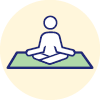 | Mind-body practicesThese are based on the belief that what we think and feel (e.g. stress, emotions) can affect our physical and mental wellbeing. And that physical symptoms can also affect mood and mental wellbeing.They may also be called psychological techniques, emotional therapies or spiritual healing. |
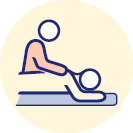 | Body-based practicesThese therapies work directly on the body and may be called bodywork or touch therapies.Some therapies involve hands-on techniques such as massage or pressure. Others use movement to stretch and stimulate different parts of the body. |
 | Energy therapiesThese are based on the belief that the body has a life force or energy that can become blocked or unbalanced. Restoring flow is believed to support healing and wellbeing.This energy is known as qi in Chinese medicine and prana in Ayurvedic medicine. |
 | Therapies using herbs and plantsHerbal remedies or botanical medicines are used in many traditional medicine systems. They are made from the roots, leaves, berries and flowers of plants.They may contain active ingredients that cause chemical changes in the body. They are usually taken by mouth or applied to the skin. |
→ READ MORE: Should I tell my doctor about the therapies I use?
Meditation and Relaxation Podcast
Listen to more of our meditation and relaxation podcast for people affected by cancer
Key resource
Download a PDF booklet on this topic.
More resources

A/Prof Geraldine McDonald, Director Patient Experience and Wellbeing, Peter MacCallum Cancer Centre, VIC; Laura Carman, 13 11 20 Consultant, Cancer Council Victoria; A/Prof Christine Carrington, Senior Consultant Pharmacist Cancer Services, Princess Alexandra Hospital and Metro South Health and The University of Queensland, QLD; Kellie Giannarelli, Consumer; Dr Suzanne Grant, Senior Research Fellow, Integrative Oncology, NICM Health Research Institute, Chris O’Brien Lifehouse, NSW; Vivienne Hansen, Bush and Western Herbal Medicine Practitioner, WA; Karla Jaji, Administration Officer, Nepean Cancer and Wellness Centre, NSW; Dr Laura Kirsten, Senior Clinical Psychologist, Nepean Cancer Services, Nepean Blue Mountains Local Health District, NSW; A/Prof Judith Lacey, Director of Supportive Care and Integrative Oncology, Chris O’Brien Lifehouse, NSW; Adjunct Professor Danforn Lim, Western Sydney University and University of Technology Sydney, NSW; Dr David Mizrahi, Senior Research Fellow and Accredited Exercise Physiologist, The Daffodil Centre, University of Sydney and Cancer Council NSW; Professor Avni Sali AM, Founder and Director, National Institute of Integrative Medicine, VIC; Gillian Thompson, Consumer; A/Prof Kate Webber, Medical Oncologist, Monash Health, VIC; Tanya Wells, Integrative Oncology Consultant and Naturopath, Melbourne Integrative Oncology Group, VIC; Prof Kate White, Professor Cancer Nursing, Cancer Care Research Unit, The Daffodil Centre, University of Sydney and Cancer Council NSW.
View the Cancer Council NSW editorial policy.