

Andrew’s story: Raising awareness about prostate cancer after a grade three diagnosis


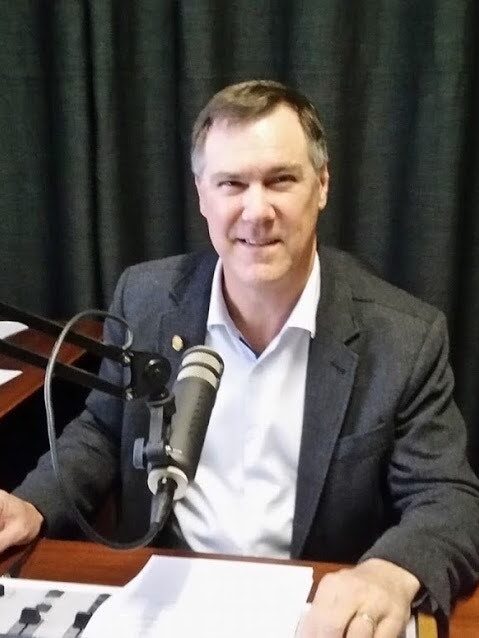
Andrew is a keen golfer, retired radio presenter, published author and host of a podcast on astronomy.
He’s always been proactive in looking after his health, visiting the doctor every year to test his blood sugar, cholesterol, and PSA levels. And his results always came up fine.
But then, the COVID-19 pandemic hit.
Diagnosed with cancer in the middle of a pandemic
During the pandemic, Andrew delayed his annual check-up with his doctor. When he finally saw his doctor, about 20 months had already passed since his last visit.
Andrew’s PSA levels came back higher than recommended. His doctor suspected that it could be an infection, so he put Andrew on a round of antibiotics. But when the next test showed that his PSA levels hadn’t improved, Andrew underwent an MRI scan and a dye test, which identified that he had prostate cancer.
“I had no expectation that it would be cancer, so it was a huge shock when I sat down, and the urologist told me, ‘You have cancer’. I was alone in the office with the urologist and had nowhere to turn,” says Andrew.
After sharing the diagnosis with his wife and three sons, Andrew was given the option of wait and watch, radiation, or a prostatectomy. With surgery being his doctor’s recommendation, that’s what he chose.
Navigating life after surgery
Andrew underwent the prostatectomy in January 2023. The surgeon believed they had removed all the cancer and that there was no sign of a breach. But a few months later, pathology results revealed that it had escaped the seminal vesicle by about 2mm.
Andrew remembers, “I was in shock again. I felt as bad as the day of my diagnosis. All along, I thought it would be over and done with, and I could get on with my life. I was wrong.”
For a while, Andrew struggled with this news. But he talked to a doctor about it and got referred to a psychologist who helped him learn mental techniques to cope.
“My message to others is to not be scared to ask for help, because you don’t have to do this on your own”, Andrew says.
“Something that helped me sleep was to count back from 1000 in multiples of 7, so 1000, 993, 986 and so on. It takes your mind away from everything else because you’re just focused on the numbers”.
Living with cancer and raising awareness to help others
Eighteen months after the prostatectomy, Andrew’s PSA levels had risen so he had radiation treatment.
Following the radiation, Andrew’s levels have remained at zero. Although it’s still too early to say if he’s “in the clear” from cancer, the signs are positive.

Since his diagnosis, Andrew has retired, gone on holidays with his wife and continues to produce a podcast about astronomy.
“I just want to make sure that I do not let cancer control my life. You can still live a full life and do the things you love, whether that be playing golf or cooking or rebuilding your mustang.”
Andrew’s message to others is simple: get checked. “This thing sneaks up on you and there are no obvious symptoms. Go to your doctor once a year. It’s that simple,” he shares.
Andrew wants others to know how a diagnosis may also have a generational impact.
“With my prostate cancer diagnosis, I was told my three boys could have a 50 per cent higher chance of developing prostate cancer in their lives. That means getting tested regularly isn’t just about you… it can be about your kids too,” he says.
Men should talk to their doctor about prostate cancer if they are experiencing symptoms that are a concern.
Quick facts about prostate cancer
- Prostate cancer is one of the most common cancers diagnosed in Australian men – about 16,700 are expected to be diagnosed in 2020. The risk of a man being diagnosed with prostate cancer before the age of 85 is about 1 in 7
- Prostate cancer is the most common cancer in Australian men and second most common cause of cancer death in males.
- Advances in early detection and treatment for prostate cancer have led to significant increases in survival time in recent decades, with over 96% of Australian men living beyond five years after diagnosis. However, many men experience long-term physical and psychological effects from their diagnosis and treatment.
For more information, visit our prostate cancer page.
If you or someone you know is living with cancer, call us on 13 11 20.