
What is it?
Massage involves moving (manipulating) muscles and rubbing or stroking soft tissues to promote relaxation. By applying pressure to muscles and pressure points, massage helps to release both muscular and emotional tension.
Why use it
Oncology massage therapists are specially trained to adjust pressure, speed, duration and direction of strokes to provide a safe session for a person with cancer. The style of massage used will depend on the treatment you’re having. It may be helpful at any stage, from those newly diagnosed, to people who have finished their cancer treatment.
There is no evidence that massage can increase the risk of cancer cells spreading to other parts of the body. A type of massage called manual lymphatic drainage can help reduce the symptoms of lymphoedema (swelling caused by a build-up of lymph fluid).
What to expect
Massage is usually done in a warm, quiet room while you lie on a massage table or sit in a chair. The therapist uses a variety of strokes on different parts of the body. In people with cancer, therapists may adjust their pressure and avoid certain areas of the body.
Some styles of massage are done with you fully clothed; others require you to undress to your underwear so the therapist can use oil to move their hands over your skin more easily. The therapist may place pillows under different parts of your body for support. Let the therapist know if you need a change in pressure or a blanket.
What is the evidence?
Many scientific studies have shown that oncology massage may help manage stress, anxiety, pain, depression, fatigue and insomnia in people who have had chemotherapy or surgery for cancer.
Massage concerns for people with cancer
See an accredited oncology massage therapist or lymphoedema practitioner to ensure they know to avoid massaging near known areas of cancer, and understand how to adapt massage to specific safety concerns relating to cancer treatments.
 | ChemotherapyThis drug treatment affects the whole body. If you have a chemotherapy port, massage should not be done in this area. Some people who have chemotherapy have tingling in their hands or feet (peripheral neuropathy), or may find they bruise or bleed easily, so need to avoid deep massage. |
 | Radiation therapyThe skin may be sensitive, red and appear sunburnt after external radiation therapy. Avoid massage to the treated area once any skin changes appear or your skin becomes sensitive. Massage oils, especially ones with fragrance or essential oils, may make already irritated skin feel worse. |
 | SurgeryRecovery takes time. It’s important to avoid massaging the surgical area until wounds have healed and there are no complications such as blood clots, infections or trapped pockets of fluid under the skin (seroma). Ask your surgeon when it is safe to start scar massage after surgery. Learn more about surgery. |
 | Bone fragilityRadiation therapy, medicines or the cancer itself may make bones more fragile. Care should be taken to avoid applying too much pressure. |
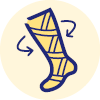 | Risk of lymphoedemaRadiation therapy or lymph node removal in the neck, armpit or groin can increase your risk of lymphoedema. See a trained lymphoedema therapist. If you already have lymphoedema, manual lymphatic drainage from a trained therapist may help. Visit lymphoedema.org.au to find a registered practitioner or see Lymphoedema. |
→ READ MORE: Medicinal cannabis
Meditation and Relaxation Podcast
Listen to more of our meditation and relaxation podcast for people affected by cancer
Key resource
Download a PDF booklet on this topic.
More resources

A/Prof Geraldine McDonald, Director Patient Experience and Wellbeing, Peter MacCallum Cancer Centre, VIC; Laura Carman, 13 11 20 Consultant, Cancer Council Victoria; A/Prof Christine Carrington, Senior Consultant Pharmacist Cancer Services, Princess Alexandra Hospital and Metro South Health and The University of Queensland, QLD; Kellie Giannarelli, Consumer; Dr Suzanne Grant, Senior Research Fellow, Integrative Oncology, NICM Health Research Institute, Chris O’Brien Lifehouse, NSW; Vivienne Hansen, Bush and Western Herbal Medicine Practitioner, WA; Karla Jaji, Administration Officer, Nepean Cancer and Wellness Centre, NSW; Dr Laura Kirsten, Senior Clinical Psychologist, Nepean Cancer Services, Nepean Blue Mountains Local Health District, NSW; A/Prof Judith Lacey, Director of Supportive Care and Integrative Oncology, Chris O’Brien Lifehouse, NSW; Adjunct Professor Danforn Lim, Western Sydney University and University of Technology Sydney, NSW; Dr David Mizrahi, Senior Research Fellow and Accredited Exercise Physiologist, The Daffodil Centre, University of Sydney and Cancer Council NSW; Professor Avni Sali AM, Founder and Director, National Institute of Integrative Medicine, VIC; Gillian Thompson, Consumer; A/Prof Kate Webber, Medical Oncologist, Monash Health, VIC; Tanya Wells, Integrative Oncology Consultant and Naturopath, Melbourne Integrative Oncology Group, VIC; Prof Kate White, Professor Cancer Nursing, Cancer Care Research Unit, The Daffodil Centre, University of Sydney and Cancer Council NSW.
View the Cancer Council NSW editorial policy.