
In this section, we discuss the different treatment options available for someone diagnosed with eye melanoma.
Learn more about:
Your treatment options
You will be cared for by a multidisciplinary team (MDT) of health professionals. Because melanoma found in the eye is a rare cancer, you may also be referred to a specialist treatment centre or an eye hospital. The MDT may include an ophthalmologist, radiation oncologist (to prescribe and coordinate a course of radiation therapy), medical oncologist (to prescribe and coordinate drug or systemic treatments, such as immunotherapy), nurses, and allied health professionals (e.g. psychologist, counsellor, social worker, physiotherapist or occupational therapist).
Your doctor will talk to you about the best treatment available to you. Options will depend on tumour size and location, and whether it has spread. The aim of treatment is to remove the cancer, and try to save the eye and as much vision as possible. Treatment options may include surgery, radiation therapy, laser treatment, photodynamic therapy and immunotherapy. These may be given alone or in combination. There may be new treatments being investigated through clinical trials (including targeted therapy) and through the Australasian Ocular Melanoma Alliance (AOMA).
Learn more about clinical trials and research.
Certain small eye melanomas may not need immediate treatment. Instead, you may have regular checks until there is growth or an increased risk.
→ READ MORE: Types of treatment for eye melanoma
Making treatment decisions
 | Understand your optionsLearn about all available treatments (e.g. surgery, chemotherapy, radiation therapy, targeted therapy or immunotherapy), including what they involve. |
 | Benefits vs side effectsConsider how each option may help control the cancer and what short- and long-term side effects might occur. |
 | Your values matterThink about what’s most important to you – quality of life, length of treatment, recovery time, fertility, work or school, and family responsibilities. |
 | Ask questionsIt’s okay to ask your doctor or health care team to repeat something or explain things in plain language. |
 | Second opinionsGetting another medical opinion is common and can help you feel more confident. |
 | Time to decideSome decisions are urgent, while others allow time to think. Ask how much time you have to think about it. |
 | Written informationUse fact sheets and reputable websites to review information at your own pace. |
 | Shared decision-makingDecisions are usually made together with your health care team, respecting your preferences. |
 | Travel and costsYou may need to consider whether to travel away from home to have treatment. You may be able to claim some of your travel costs via a government scheme. To find out more, call 13 11 20. |
Podcast: Making Treatment Decisions
Listen to more episodes from our podcast for people affected by cancer
Key resource
The information on this page is also available for download.
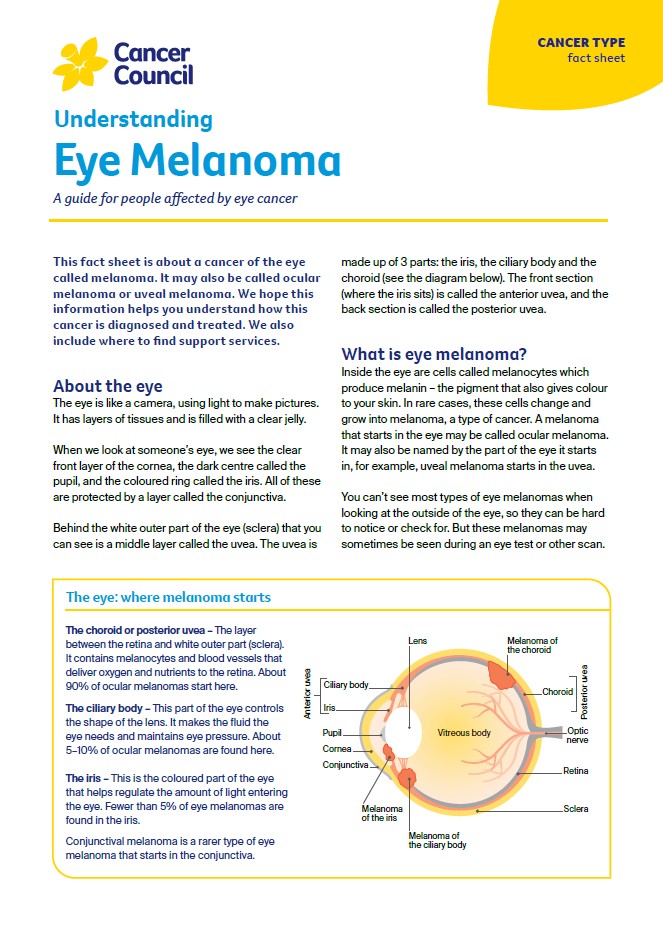
More resources

Dr Li-Anne Lim, Ocular Oncologist, Sydney Eye Hospital, NSW; Carolyn Alkemade, Consumer; Elaine Cook, 13 11 20 Consultant, Cancer Council Victoria, VIC; Peta Holly, Melanoma Telehealth Nurse, Melanoma Patients Australia; Dr Jon Lam, Ophthalmologist, Vitreoretinal Surgeon and Vitreoretinal Oncologist – Perth Retina, Fremantle Hospital and Royal Perth Hospital, WA; Dr John McKenzie, Ophthalmic Surgeon, Head of Oncology, The Royal Victorian Eye and Ear Hospital, Deputy Director of Ophthalmology, The Royal Children’s Hospital, Head of Ophthalmology, Western Health, VIC; Margie Reynolds, Consumer; Dr Wenchang Wong, Radiation Oncologist, Prince of Wales Hospital, NSW.
View the Cancer Council NSW editorial policy.