
Cancer Connect: Meet Kelly, a Cancer Council Liaison and cancer nurse

A cancer diagnosis can turn a person’s world upside down. Alongside treatment, appointments and difficult decisions, patients and families often face emotional, practical and financial challenges that can feel overwhelming.
Having a support network can make all the difference for someone going through cancer. Roles such as cancer nurses and Cancer Council Liaisons play a vital part in providing support, guidance and reassurance at every stage of a diagnosis.
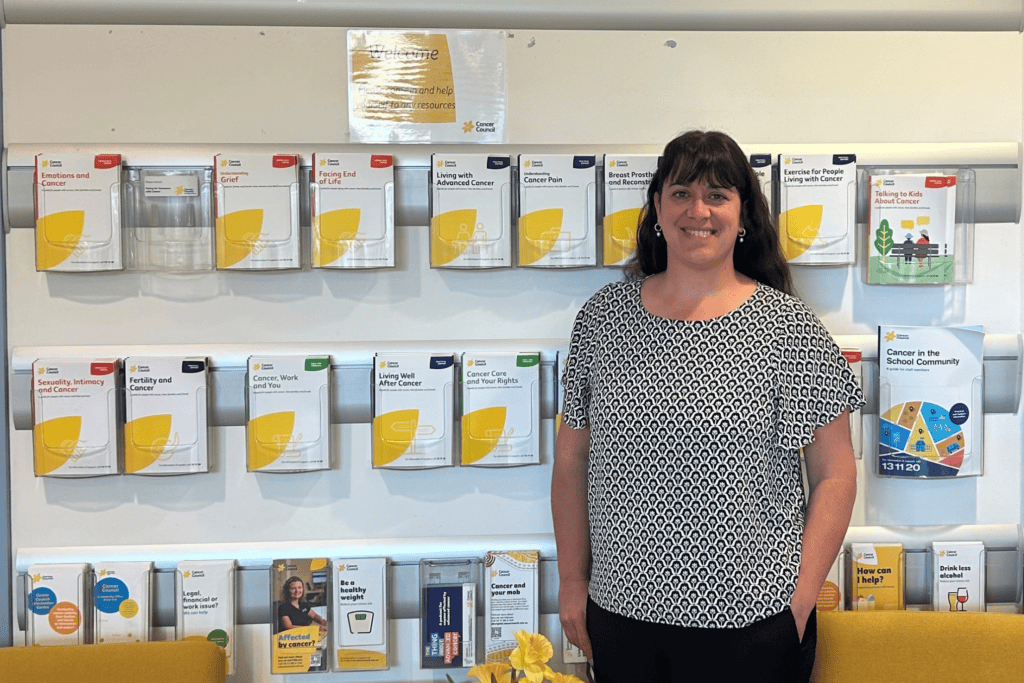
Cancer Council NSW have some experienced cancer nurses who have joined the team to work in the Cancer Council liaison roles. Kelly remains a registered nurse while fulfilling the full time role of Cancer Council Liaison at her local health district, supporting people through some of the hardest moments of their lives. Drawing on years of experience in cancer care, the various roles across her career include supporting patients and carers from diagnosis, through to survivorship or end-of-life care.
The role of a cancer nurse and Cancer Council Liaison
According to Kelly, cancer nursing is more than delivering treatment. While clinical responsibilities such as administering medications and monitoring patients are important, providing emotional support is just as vital.
“A typical day for a cancer nurse would be offering help to patients, supporting carers, helping patients with personal needs, and really listening,” Kelly explains. Her work has seen her care for patients in a range of clinical settings, from chemotherapy clinics to palliative care.
Cancer nurses are often the healthcare professionals’ patients see most frequently throughout treatment, building relationships based on trust, empathy and communication. For patients undergoing intensive cancer treatment, that support can make a significant difference.
“Some patients are coming weekly for treatment, or every day for weeks at a time,” Kelly says. “If we can make that less hard in any way we can, that’s really important.”
Kelly has been in Cancer Council Liaison for almost four years. The role complements existing supportive care services at the Cancer Centre. Kelly’s cancer nursing experience helps her connect patients and carers with the right information, services and support.
A typical day can involve meeting patients and families in hospital, helping them navigate the healthcare system, connecting them with Cancer Council services, or other suitable organisations for assistance.
“It’s mostly about offering that support at the right time and the right place and being that extra person to help collaborate with the healthcare teams,” Kelly says.
Why support matters
From experience, Kelly understands the importance of providing compassion in care.
“The emphasis is a lot more on being really present with the patient or the carer and allowing that time for them to communicate their worries and their needs,” she explains.
Cancer affects every part of a person’s life – not just their physical health. Patients may be worried about finances, legal matters, family responsibilities or what comes next after treatment. Having someone who can listen without judgment and help work through these challenges can provide enormous relief.
“For someone to say, ‘I feel so much better now I’ve spoken to you,’ is so rewarding,” said Kelly.
“I remember one patient we worked tirelessly for an urgent will, power of attorney and guardianship. It was really important to the patient to have provided that emotional safety,” says Kelly.
Whilst working in cancer care can be intensive, Kelly finds the work incredibly fulfilling.
“I want to acknowledge all the cancer nurses and health staff that work in an emotionally hard but amazingly rewarding field. You make such a difference to a patient’s journey,” she said.
If you would like more details on information and support service for anyone affected by cancer, whether facing a diagnosis, living beyond cancer, or supporting someone as a carer, friend, family member or health professional, you can contact Cancer Council NSW on 13 11 20 or visit our website www.cancercouncil.com.au
We provide confidential cancer information, practical advice, emotional support and evidence-based cancer information.