
A growing need for services: Expanding cancer support to where it’s needed
 By
Cancer Council NSW
From regional towns to culturally diverse communities, we are committed to bringing cancer information and support closer to people who need it.
For many communities, geographical, cultural and language barriers can stand in the way of timely information, treatment and support.
This year, we’ve expanded our reach – delivering services, trusted information and tailored support in more accessible ways.
Connecting regional communities to treatment
For people living in regional and rural areas, getting to cancer treatment can be a challenge. Long distances, limited transport options and the cost and stress of travel can add another burden at an already difficult time.
To address this gap, Cancer Council launched a new Transport to Treatment service in response to growing demand in the Tweed and Byron Shires in northern NSW.
“Access to transport can be a significant challenge for people affected by cancer, and this service was designed to help reduce that burden. We thank our volunteer drivers, whose generosity made this support possible,” said Caitlyn Feldmann, Community Lead, Cancer Council NSW.
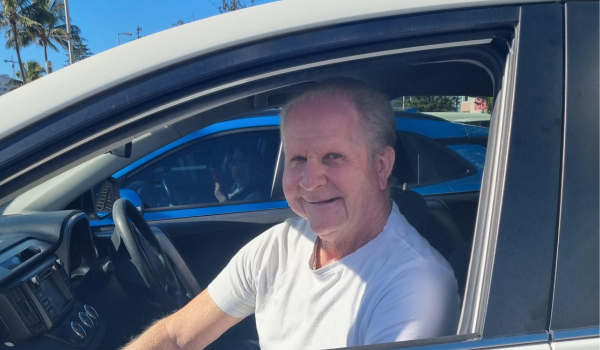
Local cancer survivor, Terry personally understands the difference this support can make.
After being diagnosed with bone cancer in 2021, he needed specialist treatment seven hours from home. Cancer Council helped coordinate flights, accommodation and transport to his appointments, removing additional pressure from an already overwhelming experience.
In a full circle moment, this year Terry became the first volunteer driver for the new Tweed/Byron transport service – helping other people access treatment and support when they need it most. Terry, along with five other volunteers, has supported the service since it commenced in February 2026. Together, they have driven over 15,000 kilometres which equates to more than 300 hours of driving, to ensure patients in their local community are able to attend treatment.
Michael*, a client from Murwillumbah, who has been accessing the service for the past three months indicated he would not have been able to get to his cancer treatment appointments without the service after being referred by Tweed Valley Hospital social worker. Reflecting on his experience of the service, Michael described Cancer Council’s volunteer drivers as ‘absolutely fabulous’. He commented that they not only provided him with transportation but also companionship and reassurance throughout his treatment journey.
The addition of the Tweed Transport to Treatment Service brings the total number of Cancer Council NSW transport services to 21 across the state. This demonstrates Cancer Council’s commitment to reducing barriers to accessing cancer treatment through strong partnerships with healthcare professionals, dedicated volunteer support and practical assistance that helps people access the care they need.
*name has been changed
Expanding culturally inclusive cancer support
We also continued to strengthen support for culturally and linguistically diverse (CALD) communities by recruiting three bilingual Cancer Council liaisons in hospitals across Southwest Sydney Local Health District. Our bilingual liaisons help people understand their care, navigate services and access support in their own language.
An evaluation of the service found that the service supported significantly more people who speak a language other than English at home. The number of clients referred to the service and the number of occasions of service both tripled, highlighting the positive impact of this model on service accessibility and engagement.
At the same time, the Multicultural Community Education Program, delivered in partnership with Cancer Institute NSW, brought culturally tailored cancer screening information directly into communities experiencing inequities in cancer outcomes.
Across metropolitan, regional and rural NSW, 32 co-designed, in-language workshops were delivered focusing on language, culture, health literacy and navigating the healthcare system. The sessions reached 1,005 people from Arabic, Mandarin, Cantonese, Vietnamese, Hindi, Punjabi, Korean and Nepali-speaking communities. The workshops empowered 36 Community Champions to help extend this knowledge further into their communities.
The results demonstrate the impact of delivering information in accessible ways to improve awareness, knowledge and confidence in cancer screening.
Participants’ knowledge pre and post workshops increased from 22% to 72% for breast screening, 15% to 65% for bowel screening and 12% to 63% for cervical screening. Following the workshops, 96% of participants understood the benefits of screening and 92% knew how to access screening services in NSW.
Importantly, the program translated education into action, facilitating 69 breast screening bookings, 19 completed breast screens, 37 cervical screening self-collection samples, and distributed 29 bowel screening kits.
By bringing transport, information and personalised support closer to communities, we are removing barriers contributing to inequitable cancer outcomes – so more people across NSW can access the life-saving care and support they need