

Life after cancer: rural and regional areas
A guide for people in the first few months after treatment for cancer
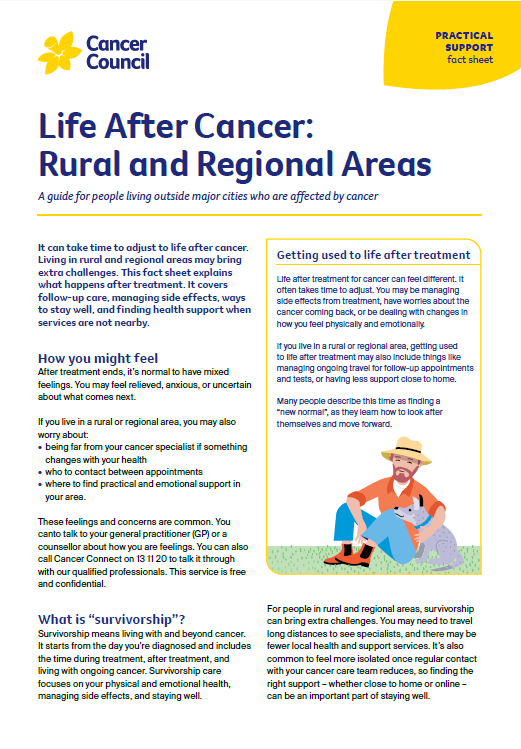
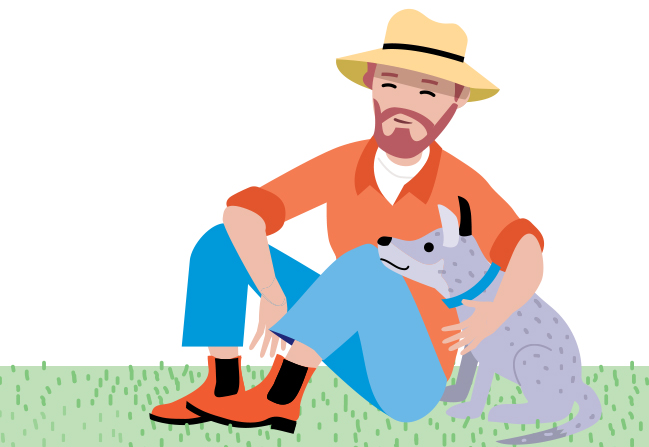
It can take time to adjust to life after cancer. Living in rural and regional areas may bring extra challenges.
To learn more about what happens after treatment, including follow-up care, managing side effects, rural financial support, ways to stay well, and finding health support when services are not nearby, see our Life after cancer: rural and regional areas information on the Cancer Connect website..
Need to talk?
Dr Florian Honeyball, Medical Oncologist, Western Cancer Centre. NSW; Professor Bogda Koczwara AM, Director, Australian Research Centre for Cancer Survivorship, (a UNSW partnership with Cancer Council NSW); Morgan Atkinson, Senior Manager, SA/NT Youth Cancer Service, Royal Adelaide Hospital, SA; John Clements, Consumer; Robyn Fanning, Specialist, Supportive Care & Accommodation, Townsville, Cancer Council Queensland, QLD; Kirsty Glanville, Wiradjuri woman and Director, Aboriginal and Torres Strait Islander Equity, Cancer Council Australia; Sandy Hutchison, Clinical Psychologist, Cancer Wellbeing Centre, Indooroopilly, QLD; Dr Wei-Sen Lam, Cancer Service Lead, Department of Health, Medical Oncologist, Esperance Hospital and Head of Service, Medical Oncology, Fiona Stanley Hospital, WA; Ian Martin, Consumer; Louise Moodie, Director, Dietetics, Mackay Hospital and Health Service, QLD; Dr Simone Reeves, Radiation Oncologist, Ballarat-Austin Radiation Oncology Centre (BAROC), VIC; Deb Roffe, 13 11 20 Consultant, SA; Dr Hannah Rothermel, General Practitioner, Bulgarr Ngaru Medical Aboriginal Corporation, Maclean Clinic, NSW; Dr Sean Stevens OAM, General Practitioner and Co-Owner, Grove Medical, WA; Carissa Stone, Nurse Consultant, McGrath Foundation, Adelaide, SA; Victoria Turner, Consumer; Shirley Witko, Senior Social Worker, Kimberley Cancer Services, WA Country Health Service, WA.
View the Cancer Council NSW editorial policy.