
What are e-cigarettes?

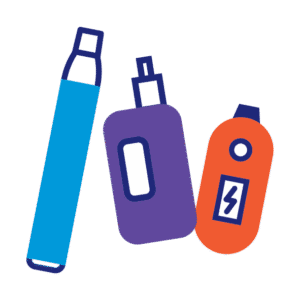
E-cigarettes or “vapes” are battery-powered or rechargeable devices designed to deliver nicotine and other chemicals via an aerosol vapour directly into the lungs. Most vapes contain nicotine, the highly addictive chemical found in cigarettes, and products vary in terms of ingredients and design.
It is illegal for retailers other than pharmacies to sell any type of vaping good. In NSW, 11% of people aged 16 years and over reported daily or occasional vaping in 2025, an increase from 2% in 20201.
E-cigarette use and young people
Vapes come in appealing colours, designs and flavours like fruit, candy, mint and menthol, which make them more attractive to young people. Easy access combined with youth targeted marketing from the tobacco and vaping industry are all strategies to addict a new generation to nicotine.
Vaping prevalence among young Australians remains a concern. In 2022–2023, 13.3% of people aged 15–24 were current vapers, up from 2.3% in 20192. In NSW, use is highest among 16–24 year olds, with over one in five (22%) reporting daily or occasional vaping, the highest rate of any age group across 2024–20251.
E-cigarettes addict a new generation of young people to nicotine and risks undoing progress in tobacco control. Young people who vape are up to five times more likely to take up cigarette smoking, the leading preventable cause of cancer.
Health harms of e-cigarettes
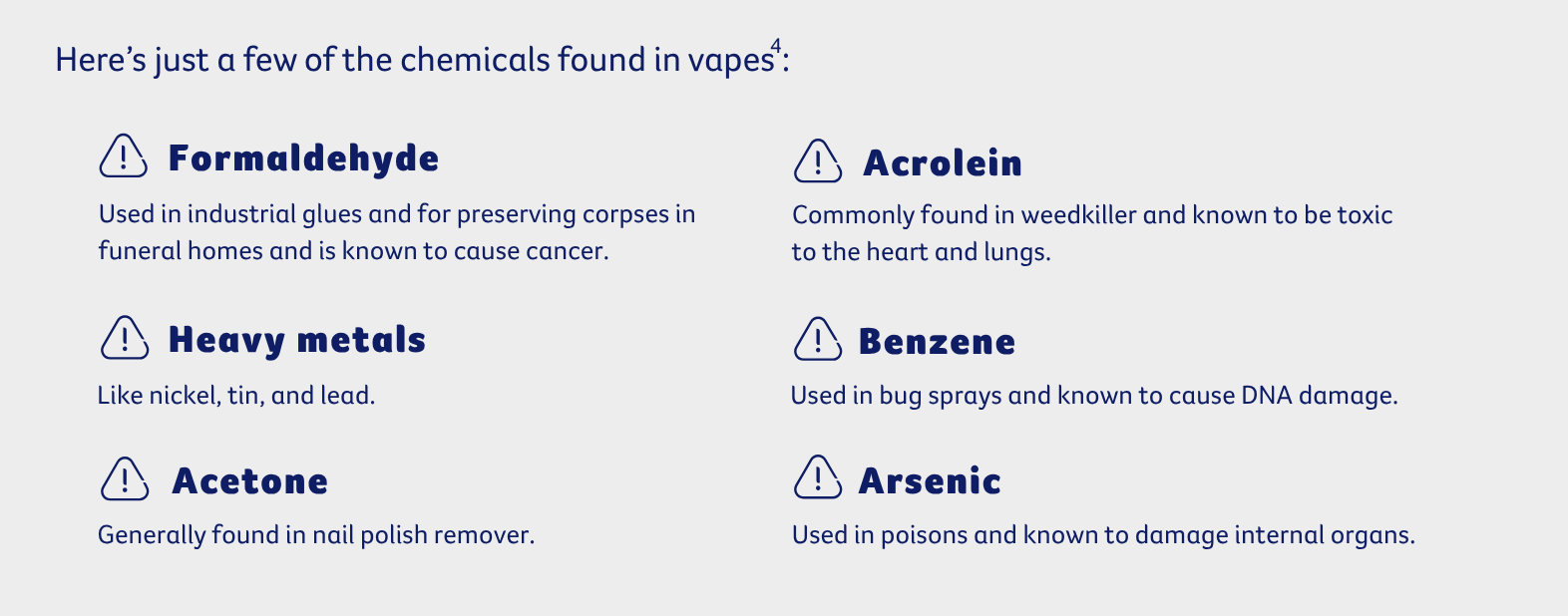
Vaping is harmful to health at any age. While the long-term impacts of vaping are still being researched, emerging evidence suggests that nicotine e-cigarettes are likely to cause lung and oral cancer3. Vapes are not safe. The vapour inhaled contains hundreds of chemicals, as well as heavy metals, volatile organic compounds and cancer-causing chemicals, which can impact both physical and mental health.
Most e-cigarettes contain nicotine, even when labelled ‘nicotine free’5. Some vapes can deliver as much nicotine as 50 cigarettes in one device. Nicotine is a very addictive drug, which can make vaping really hard to quit. For young people, nicotine can harm brain development and impact attention, learning, memory and changes in mood6.
Nicotine is particularly harmful to children and infants, even small amounts can cause poisoning if swallowed. If you think someone has been poisoned by liquid nicotine, urgently call the NSW Poisons Information Centre on 13 11 26 or call 000 if it is an emergency.
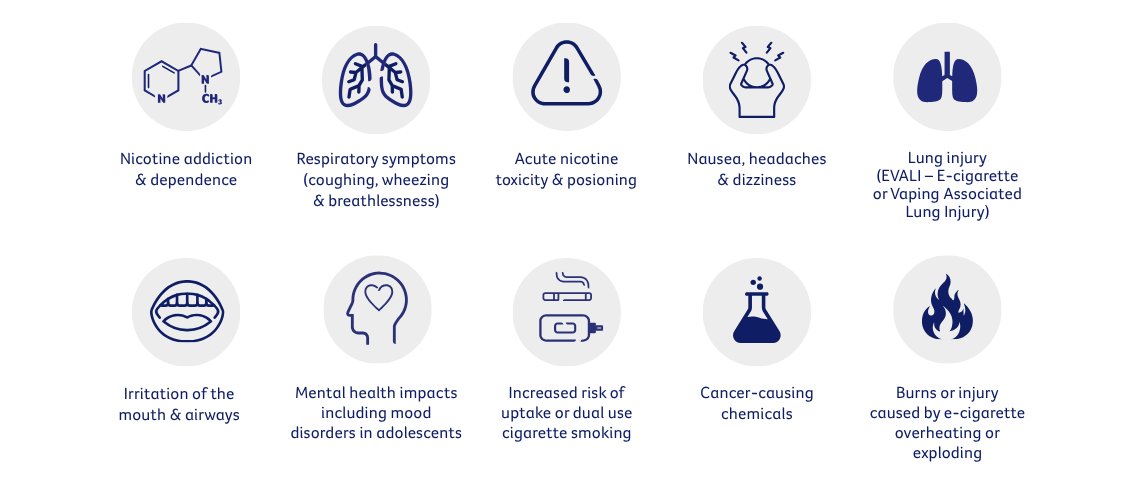
Some health harms of vaping include:
Frequently Asked Questions
In Australia, all vapes (with or without nicotine) can only be legally sold in pharmacies for therapeutic purposes. Retailers other than pharmacies (including convenience stores and online sellers) cannot legally sell vapes or e‑liquids.
People aged 18 years and over can purchase vapes from a pharmacy without a prescription, following consultation with a pharmacist. Vapes are kept behind the counter, and photo ID is required at the point of sale.
Legally supplied vapes must meet strict product standards, including:
- Plain packaging
- Limits on nicotine concentration
- Restrictions on flavours (mint/menthol or tobacco only)
NSW Health has additional enforcement powers and penalties targeting the illegal supply of vaping goods.
For more information:
- Visit the Australian Government Therapeutic Goods Administration (TGA) website for details on national vaping reforms
- Visit NSW Health for information on vaping laws and enforcement in NSW
The evidence for e-cigarettes as cessation aids to help people quit smoking is inconclusive. The Therapeutic Goods Administration (TGA) is Australia’s government authority responsible for assessing, evaluating, and monitoring therapeutic goods (medicines, medical devices and biologicals). The TGA has not approved any e-cigarette product as a cessation aid to help with quitting smoking. The Australian Competition and Consumer Commission (ACCC) has also advised that e-cigarettes should not be advertised as a safe alternative to smoking.
The TGA has approved many other products such as patches, gum, lozenges, mouth spray, and stop smoking medications (Bupropion and Varenicline) as quitting aids that are safe to use and are shown to increase the chances of quitting smoking.
Alternatively, people who smoke can get support to quit from GPs or pharmacists, calling the NSW Quitline at 13 78 48, downloading the Pave or My QuitBuddy apps or exploring the iCanQuit website.
The rule is simple: Vaping is banned anywhere that cigarette smoking is banned. According to the NSW Smoke-free Environment Act 2000, smoke-free areas where people cannot smoke or use e-cigarettes are:
- All indoor public places
- Outdoor public places (public swimming pools, spectator areas at sports grounds, public transport stops and platforms, commercial outdoor dining areas, within 4 metres of a pedestrian access point to a public building and more)
- In a car with a child under 16 years of age in the vehicle.
- Using e-cigarettes on public transport vehicles (e.g., trains, buses, light rail, ferries) is also banned under the Passenger Transport (General) Regulation 2017.
For more information on smoke-free legislation, enforcement, and reporting, please see the NSW Health Smoke-free laws webpage.
Resources
Find support to help quit vaping or smoking
Speak to your GP, Aboriginal or youth health service, or other health services to help quit vaping or smoking. There are also the following supports designed to help:
References
- NSW Ministry of Health. NSW Population Health Survey (SAPHaRI) [Internet]. Sydney: Centre for Epidemiology and Evidence; [cited 2026 Jun 5]. Available from: NSW Population Health Survey methods and results
- Australian Institute of Health and Welfare [Internet]. 2024. National Drug Strategy Household Survey 2022–2023: Vaping and e-cigarette use in the NDSHS.
- Banks E, Yazidjoglou A, Brown S, Nguyen M, Martin M, Beckwith K, et al. Electronic cigarettes and health outcomes: umbrella and systematic review of the global evidence. Med J Aust. 2023 Apr 3;218(6):267–75. PubMed PMID: 36939271; PubMed Central PMCID: PMC10952413.
- NSW Health. Vaping evidence summary [Internet]. 2023. Vaping evidence summary.
- National Health and Medical Research Council. NHMRC Statement: Electronic Cigarettes. [Internet]. Canberra: National Health and Medical Research Council; June 2022.
- National Center for Chronic Disease Prevention and Health Promotion (US) Office on Smoking and Health. E-Cigarette Use Among Youth and Young Adults: A Report of the Surgeon General [Internet]. Atlanta (GA): Centers for Disease Control and Prevention (US); 2016 [cited 2026 Feb 5]. (Publications and Reports of the Surgeon General). Available from: PubMed PMID: 30869850.
Generation Vape Research Project
Vaping addicts a new generation of young people to nicotine and increases the risk of smoking uptake – the biggest preventable cause of cancer. Generation Vape is Australia’s first and largest research collaboration, tracking and exploring vaping among young people.