
Discover how physical activity can improve your health during and after cancer treatment. Learn safe exercise guidelines.
Learn more about:
- Overview
- How much exercise should I do?
- Who can help with physical activity
- Movement and muscle techniques
Overview
Before starting any new exercise program, ask your cancer care team or GP about the type and amount of exercise that’s best for you, and any precautions that you may need to take.
Exercise can help during and after cancer treatment. It may:
- reduce the severity of treatment side effects
- improve physical function, fatigue and psychological wellbeing
- potentially reduce cancer recurrence and improve survival for some cancer types (e.g. breast, bowel, prostate).
How much exercise should I do?
The Clinical Oncology Society of Australia (COSA) recommends that most people with cancer aim for and maintain per week:
- at least 150 minutes (2½ hours) of moderate intensity aerobic exercise or 75 minutes (1¼ hours) of vigorous aerobic exercise
- 2–3 strength or resistance sessions of moderate to vigorous intensity targeting major muscle groups to build muscle strength.
Who can help with physical activity
Exercise professionals can develop an exercise program to meet your specific needs and show you how to exercise safely. Some treatment centres offer exercise help, but you may need to see someone privately.
| Exercise physiologist | An accredited exercise physiologist (AEP) uses exercise to help with chronic disease management and to improve overall wellbeing. To find an exercise physiologist near you, visit essa.org.au/find-aep. |
| Physiotherapist | They focus on physical recovery and prevention/treatment of injuries using techniques such as exercise, massage and joint manipulation. To find a physiotherapist, visit choose.physio/find-a-physio. |
Movement and muscle techniques
While studies into the use and safety of the below therapies in people with cancer are limited, these forms of therapist-led movement exercise can help improve breathing, strength, flexibility, mobility, fitness and general wellbeing. Learn more about yoga.
| Bowen technique (Bowtech) | A therapist applies gentle pressure to acupuncture and reflex points to release the muscles and tension in soft tissue and tendons. A Bowen session lasts up to an hour, and most people have 3–4 sessions. |
| Alexander technique | This therapy teaches people ways to improve posture and movement, and to use muscles efficiently. By changing the way people use their body, this therapy may enhance mental and physical functioning. |
| Pilates | A system of strengthening and stretching exercises that focus on developing the body’s core (abdominals, lower back and hips). Pilates encourages the mind to be aware of its control over the muscles and change postural habits that have contributed to pain, reduced mobility and poor coordination. It started as a form of physical therapy. |
| Feldenkrais method | A series of guided movements designed to improve balance and flexibility. It helps people become more aware of the way they move and how this contributes to, or compensates for, bad posture, pain and mobility restrictions. Trained therapists use touch, movement, guided imagery and mindful body awareness to stimulate the brain to improve movement and posture. |
→ READ MORE: Whole medical systems
Video: Exercise and cancer
 to turn on auto-generated subtitles in your language.
Podcast: Meditation and Relaxation
Listen to more of our meditation and relaxation podcast for people affected by cancer
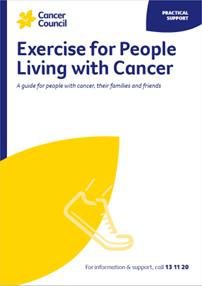
Key resource
Download a PDF booklet on this topic.
More resources

A/Prof Geraldine McDonald, Director Patient Experience and Wellbeing, Peter MacCallum Cancer Centre, VIC; Laura Carman, 13 11 20 Consultant, Cancer Council Victoria; A/Prof Christine Carrington, Senior Consultant Pharmacist Cancer Services, Princess Alexandra Hospital and Metro South Health and The University of Queensland, QLD; Kellie Giannarelli, Consumer; Dr Suzanne Grant, Senior Research Fellow, Integrative Oncology, NICM Health Research Institute, Chris O’Brien Lifehouse, NSW; Vivienne Hansen, Bush and Western Herbal Medicine Practitioner, WA; Karla Jaji, Administration Officer, Nepean Cancer and Wellness Centre, NSW; Dr Laura Kirsten, Senior Clinical Psychologist, Nepean Cancer Services, Nepean Blue Mountains Local Health District, NSW; A/Prof Judith Lacey, Director of Supportive Care and Integrative Oncology, Chris O’Brien Lifehouse, NSW; Adjunct Professor Danforn Lim, Western Sydney University and University of Technology Sydney, NSW; Dr David Mizrahi, Senior Research Fellow and Accredited Exercise Physiologist, The Daffodil Centre, University of Sydney and Cancer Council NSW; Professor Avni Sali AM, Founder and Director, National Institute of Integrative Medicine, VIC; Gillian Thompson, Consumer; A/Prof Kate Webber, Medical Oncologist, Monash Health, VIC; Tanya Wells, Integrative Oncology Consultant and Naturopath, Melbourne Integrative Oncology Group, VIC; Prof Kate White, Professor Cancer Nursing, Cancer Care Research Unit, The Daffodil Centre, University of Sydney and Cancer Council NSW.
View the Cancer Council NSW editorial policy.